
How Arrest Warrants Work in Valencia County
An arrest warrant is a court command built on a probable-cause showing. In Valencia County, the paperwork runs through two state forms. Form 9-210 carries the command itself, naming the state, county, city, court, case number, defendant, offense, statutory or ordinance section, execution jurisdiction, judge and date, plus the law-enforcement entry and return fields. Form 9-209 is the supporting affidavit. It lays out the offense, date, and place, the sworn facts, the affiant, and the officer who administered the oath. The issuing court stays in control of the order after that. VCSO, municipal police, state officers, or another agency named on the form may execute it, depending on the jurisdiction written there. So the practical questions for any reader are simple: which court issued the warrant, and which record do you actually need from it?
Probable Cause on a Valencia Arrest Warrant
The Form 9-209 affidavit asks for sworn facts supporting probable cause, and it may ask the affiant to explain why hearsay is credible. Form 9-210 then carries the resulting arrest command and names the offense and the jurisdiction for execution. A public page in Valencia County can explain those fields without reproducing a live affidavit or a private person's identifiers.
| Court and case | The court, county, city, and case number identify the issuing file. |
|---|---|
| Probable-cause facts | The supporting affidavit states the sworn factual basis. |
| Offense or ordinance | The form names the offense and legal section. |
| Execution jurisdiction | The order selects the authorized area or agency scope. |
| Return fields | Arrest, service, removal, and signature fields track later action. |
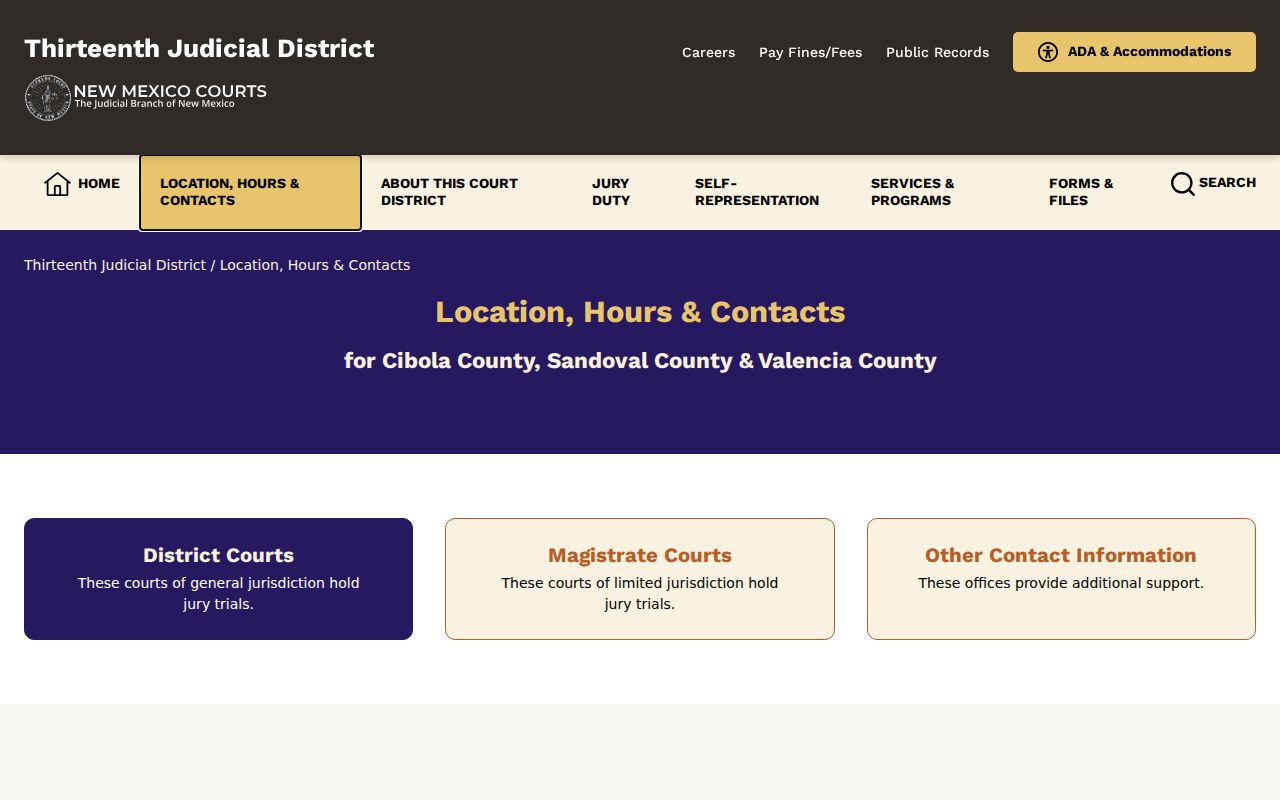
The Thirteenth District contact page identifies the Valencia court route for a district case.
Arrest Warrants: What They Contain
A public warrant record may show the issuing court, the case number, defendant fields, the offense, and the probable-cause reference, along with the judge and date, the execution jurisdiction, entry information, the service or arrest return, any bond or bailable condition, and a later cancellation or similar event. Sealed, redacted, investigative, juvenile, and restricted material may stay out of view. A safe sample can use VAL-ARREST-RECORD-SAMPLE to mark where a case number would appear. That label exists for explanation only. It is not a live Valencia County record, and no names, dates of birth, addresses, photographs, or private case documents belong in a public example.
VCSO’s Court-Order Role
The Valencia County Sheriff's Office lists civil process, execution of court orders, extradition and prisoner transport, and court security among its public functions. That makes VCSO a possible executing or records agency. It does not make VCSO the court that issued an arrest warrant, nor the office that decides whether a judge's order gets withdrawn.
County records request
Use NextRequest for a specific VCSO report, execution, transport, or body-camera record.
Ask the court for the order or disposition. Ask VCSO for the agency record it created. Keeping the two requests separate spares each Valencia County office from certifying a record it does not hold.
How Warrants Get Served in Valencia County
Who actually serves a warrant depends on the form. Form 9-210 can name state or county officers, municipal officers, campus officers, tribal or Pueblo officers, and other directed categories, and the jurisdiction choice on the form controls. VCSO's public page confirms county execution and transport functions. That does not make the Valencia County sheriff the only agency that can serve an order. After an arrest, the trail splits into separate records: the booking record, the court warrant, the service return, and any later bond or release event. A person or family member can ask the court for the warrant and return, the agency for an execution report, and detention for the limited charge and bond information the center releases. Each office answers for its own piece.
Arrest Warrants, Summonses, and Bench Warrants
The words on the court record guide the next call. A summons simply asks a person to appear. A bench or FTA warrant responds to a missed court duty or another listed noncompliance event. An arrest warrant, by contrast, runs through a probable-cause process and authorizes taking a person into custody in Valencia County.
| Record type | Typical source fields | First local route |
|---|---|---|
| Summons | Notice, appearance date, case and court | Issuing clerk |
| Bench or FTA warrant | Missed setting, payment, release, probation, or contempt trigger | Issuing court |
| Arrest warrant | Probable-cause affidavit, offense, judge, execution scope | Court or lawyer |
Do not rely on the label in a commercial database. Confirm the official Valencia County case record with the issuing court.
A Valencia Arrest Warrant Is Not a Booking Record
The Detention Center's public information page describes limited current charges and bond amounts. It does not provide the complete court file, the full affidavit, every return event, or protected housing, medical, or classification information. Booking shows custody processing, nothing more. It cannot by itself tell you whether a Valencia County warrant was later canceled, surrendered, or otherwise resolved.
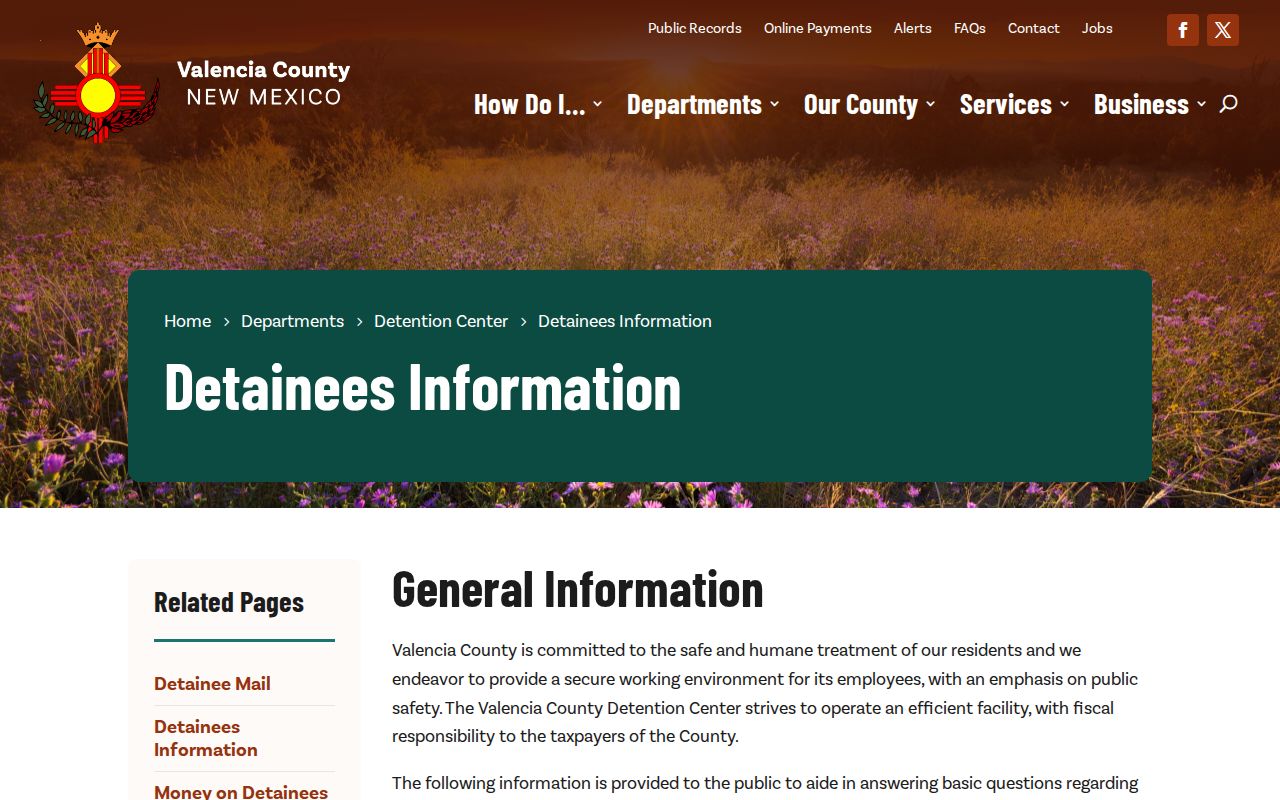
The Detention Center information page sets out the limited public charge and bond route.
Need a custody record? Use Detention Records at 505-565-8900 ext. 1 or a focused NextRequest request, and ask the Valencia County court about warrant status.
Handling an Arrest Warrant in Your Name
Call the issuing court or talk with a lawyer before choosing a response. Ask whether the court permits an appearance, a surrender, bond, or another step, and ask what proof will show the result. The right move depends on the case and the court. A visit to the Valencia County sheriff is not a universal recall procedure.
Verify first: A real court will not require gift cards, cryptocurrency, or an instant transfer because a caller says an arrest is imminent.
- Write down the court, case number, and source of the notice.
- Use Case Lookup only as an individual-record lead.
- Call the court through its official contact page.
- Ask which warrant type and event are on file.
- Keep the receipt, order, or clerk confirmation after any authorized action.
For a fuller picture of local resolution routes, the Valencia County warrant records home keeps the court, sheriff, and detention roles together in one place.
Federal Arrest Warrants Use a Different Route
A federal warrant belongs to the U.S. District Court for the District of New Mexico and federal agencies, not the Valencia County courts. PACER is the main federal docket route, and the District of New Mexico clerk lists 505-348-2000. Sealed federal warrant documents stay unavailable in most cases. The U.S. Marshals Service page describes fugitive investigations and apprehension functions, but it publishes no Valencia County roster.
| Question | State or county route | Federal route |
|---|---|---|
| Issuing court | Valencia District, Magistrate, or municipal court | U.S. District Court |
| Public search | Case Lookup and clerk | PACER and clerk |
| Executing agency | VCSO, municipal, state, or other directed officers | U.S. Marshals and partners |
Scam Calls Claiming Valencia Arrest Authority
Scam callers have been pretending to hold arrest authority in Valencia County. New Mexico Courts say plainly that courts do not call or email demanding payment over missed jury duty or a warrant. On March 25, 2025, the District of New Mexico issued a federal warning about the scheme. Hang up. Then verify a local claim through the court's published number or the VCSO's official site. A federal claim goes through the federal court or your counsel. Never trust the number inside a text, QR code, or voicemail. The official federal warning spells out the verification route, and any request for a gift card, cryptocurrency, rushed transfer, or personal payment account is a scam signal.